
The Movement
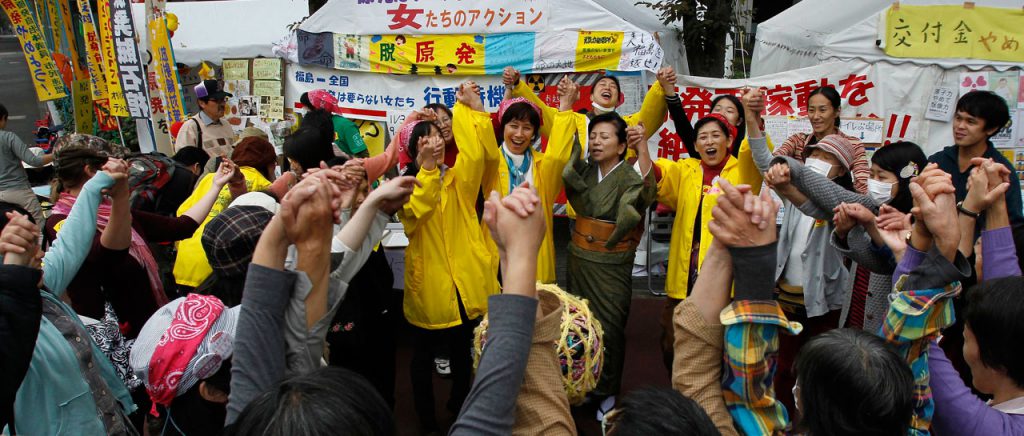
Statement of Need
NUCLEAR POWER IS BEING FALSELY PROMOTED IN THE NAME OF CLIMATE ACTION
Japan is the only country in the world that is both seismically active and operates nuclear power reactors nationwide. In 2011, Japan suffered the Fukushima disaster—one of the most serious nuclear accidents in history. Despite this, Japan’s Strategic Energy Plan aims to increase the share of nuclear power to 20–22% of the country’s electricity supply by 2030. Achieving this target would require restarting an additional 14 to 22 reactors, in addition to the 14 currently in operation.
We want to be successful in communicating because the stakes are too high to remain silent or misunderstood. Japan’s push to expand nuclear power—despite its seismic vulnerability and the painful lessons of Fukushima—carries significant risks for public safety, environmental integrity, and our chances to properly mitigate climate disaster. Clear, effective communication is essential to inform the public, influence policymakers, and spark a national dialogue grounded in science, responsibility, and transparency.
If we fail to communicate this message successfully, we risk sleepwalking into a second Fukushima disaster—one that could have been prevented through greater awareness, debate, and participation in the choices we make as a nation. Green Action is committed to creating the space for these critical conversations, empowering people to organize and participate in building a safer, more sustainable energy future.
NUCLEAR POWER IS IMPEDING JAPAN’S UNIQUE POTENTIAL TO LEAD ON CLIMATE ACTION
Japan’s culture, technological expertise, and robust economy uniquely position it to lead in energy conservation and efficiency—key pillars essential to meaningful climate action. Yet instead of building on these strengths, the government, nuclear industry, and major utilities are aggressively pushing nuclear power as an essential climate solution. For example, Kansai Electric Power Company (Kepco), Japan’s second-largest utility, is channeling the majority of its 1 trillion yen so-called “climate” investments over these 5 years into nuclear energy. This strategy ignores Japan’s past mistakes, which demonstrated the risks of prioritizing nuclear over more effective alternatives. After the Kyoto Protocol was adopted, the Japanese government—pressured by the nuclear lobby—announced plans to construct 21 new nuclear reactors by 2010 to meet its emissions targets. Only eight were completed. This misguided expectation significantly derailed Japan’s progress in renewable energy, conservation, and efficiency.
Support for nuclear energy not only reintroduces significant risks but also undermines genuine climate action. Nuclear power is too slow, too expensive, and too unreliable to meaningfully address the urgency of the climate crisis. Worse still, it diverts resources and political will away from proven, safer alternatives such as renewable energy, conservation, and energy efficiency.
Goals and Objectives
- Provide reliable, accessible information to counter nuclear energy misinformation and effectively reframe nuclear power as a climate liability.
- Present viable, sustainable alternatives to nuclear power that will enhance the effectiveness of climate action.
- Serve as a catalyst for collaboration, connecting and energizing NGOs, academics, legal experts, artists, and journalists from around the world to engage in the conversation, amplify the dialogue, and drive meaningful climate awareness and change.
Search