Immediate release: Japanese Citizens Challenge Quality of Cogema MOX Fuel, Oppose Japanese Pluthermal Program,Meet with Ministry of Economy, Trade, and Industry (METI)
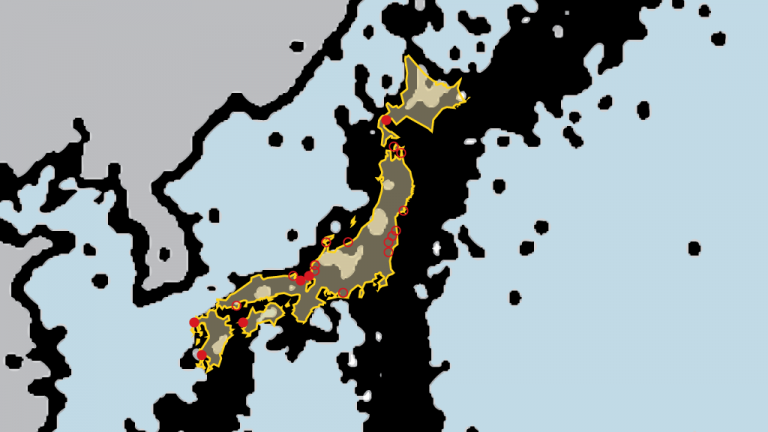
Citizen organizations from Aomori, Fukushima, Niigata, Fukui, Tokyo region, Kansai region, and Kyushu region submit petition to stop Cogema fuel and technology from entering Japan
For immediate release: 13 February 2001 Contact persons:Aileen Mioko Smith (+ 81 90 3620 9251) / Stephen Ready
Kyoto, Japan—-On 12 February, citizens from prefectures with Tokyo Electric nuclear power plants slated to use MOX (mixed plutonium uranium oxide) fuel under Japan’s plutonium program submitted a petition to the Japanese Ministry of Economy, Trade and Industry seeking government rejection of MOX fuel currently being fabricated at Cogema’s Melox facility for Tokyo Electric’s Fukushima Unit I-3 reactor. They were joined in the petition by Green Action, Mihama-no-Kai and other organizations. A total of 24 organizations nationwide signed the petition. The petition also seeks government scrapping of plans to build a MOX fuel fabrication facility in Aomori prefecture which uses Cogema technology.
Citizens who filed the petition were from Aomori, Fukushima, Niigata, and Fukui prefectures along with Tokyo, Kansai, and Kyushu regions. The petition was handed over to METI officials of the Nuclear and Industrial Safety Agency (Nuclear Safety Administration Division, and, Nuclear Power Inspection Division) at a meeting held at the House of Representatives Diet Office Building. Two Diet offices were also represented.
The petition was prompted by Kansai Electric’s announcement on 26 December that it was scrapping plans to use MOX fuel fabricated by Cogema for its Takahama nuclear power plant, and, a report by NUPEC (Nuclear Power Engineering Corporation) commissioned by the Japanese government. The NUPEC report findings indicate problems in Cogema’s MOX fuel fabrication technology.
According to Kansai Electric, the decision to abandon the MOX fuel manufactured at the Cogema Melox facility was prompted by the Japanese government informing the company a month earlier on 29 November that even if the company were to submit an application for approval of the fuel, the government would reject it on grounds Kansai Electric had failed to meet the new regulatory requirements for imported MOX fuel. The regulation came into effect in July 2000.
Citizens, however, have strong doubts that this was the true reason for the fuel’s rejection since the new regulations specifically exempt fuel that was already under fabrication, such as the Kansai Electric Cogema fuel, from meeting requirements placed on fuel to be fabricated after the regulations took effect.
One of the reasons given by the government to justify rejection of the Kansai Electric Cogema fuel was that Kansai Electric did not conduct its own ‘pre-fabrication audit’ of the Melox facility. Yesterday, however, METI admitted that, ‘It would have been a physical impossibility for Kansai Electric to have conducted a pre-audit’. However METI stated it had nevertheless placed this requirement on the fuel. According to METI it ‘knew from the beginning’ that the fuel would be rejected but only informed Kansai Electric in November of 2001. METI stated yesterday that in spite of the many meetings it had held with Kansai Electric concerning the fuel, it never informed the company the fuel would be rejected because, ‘Kansai Electric never asked’.
METI’s rejection came the day following Kansai Electric’s submission of a two-page document to METI explaining the process the company had undertaken in order to quality the fuel. Reiko Oshima, member House of Representatives who attended the meeting told METI officials it was scandalous that METI’s review process for MOX fuel approval was so slipshot, requiring only a two-page document and a one day review process.
The NUPEC study, published in March 2001, reports on analyses of plutonium spots in MOX fuel fabricated by Belgonucleaire and what the report only identifies as ‘the other MIMAS’ fabricator. The study reveals a multitude of plutonium spots particularly in the latter’s fuel. METI, in response to citizens’ questioning yesterday, divulged that ‘the other MIMAS’ fuel was Cogema’s. The data and photographs in the NUPEC report reveal extensive areas in the Cogema fuel with 25% plutonium concentration (enrichment), a sign that the process of mixing the plutonium and uranium in Cogema’s A-MIMAS process is not going well. [NUPEC report, p.75, graphs 4.4.1-9a and 4.4.1-9b ] High plutonium enrichment areas are called ‘plutonium spots’ and are a safety concern. The NUPEC report describing the graphs states, ‘The peak in the area of 25% plutonium concentration is a concentration close to the plutonium concentration figure of the first powder mix, and is thought to be a peak arising from plutonium spots. ‘ [NUPEC report p.53.] (Informal English translation of Japanese text by Green Action.) METI’s Shinichi Mizumoto of the Nuclear Safety Administration Division stated yesterday that ‘areas of 25% plutonium concentration are not a problem’ but admitted when asked to back up his statement that there were no standards established in Japan concerning plutonium concentrations.
In the past, Japanese citizen organizations have repeatedly asked both Cogema and Kansai Electric to release information concerning quality control of Cogema fuel. The information has, nevertheless, never been released.
Citizens told METI officials yesterday that the government should respect the May 2001 citizen referendum which took place Kariwa village which rejected use of MOX fuel, thereby abandoning the pluthermal program altogether. Kariwa is, along with Kashiwazaki city, the site of Tokyo Electric’s Kashiwazaki-Kariwa nuclear power plant complex, the largest capacity nuclear power plant site in the world.
Green ActionSuite 103, 22-75 Tanaka Sekiden-cho, Sakyo-ku Kyoto 606-8203 Japan
T + 81 75 701 7223
F + 81 75 702 1952
E-mail amsmith@gol.com